The diagnosis you were given years ago — is it still the right story?
Written by resident Osteopath, Leon Baugh
A disc bulge. A weak core. “Something showed up on the scan.” Many people carry these labels for years. But bodies change, and old explanations don’t always keep up.
--------------
One of the most common things people say when they sit down with me for the first time is some version of this:
“I’ve been told I have a disc bulge. That’s what’s causing it.”
My first question is always the same: when was that diagnosed?
Sometimes it was recent. Often it wasn’t. Seven years ago. Twelve years ago. Occasionally people aren’t entirely sure — they just know they were told something was there, and they’ve been organising their lives around it ever since.
The diagnosis arrived. And then it stayed.
Key Takeaways
✔ What got shown in an MRI or Xray sometime ago may not be what you're dealing with now
✔ How you regain your mobility and get free from pain may need to be updated
✔ Gaining a full picture of what is happening can save you a lot of time and give you freedom from further pain sooner
✔ If you’ve been carrying the same explanation for your back for years and things haven’t really shifted, it may be time to look at it differently.
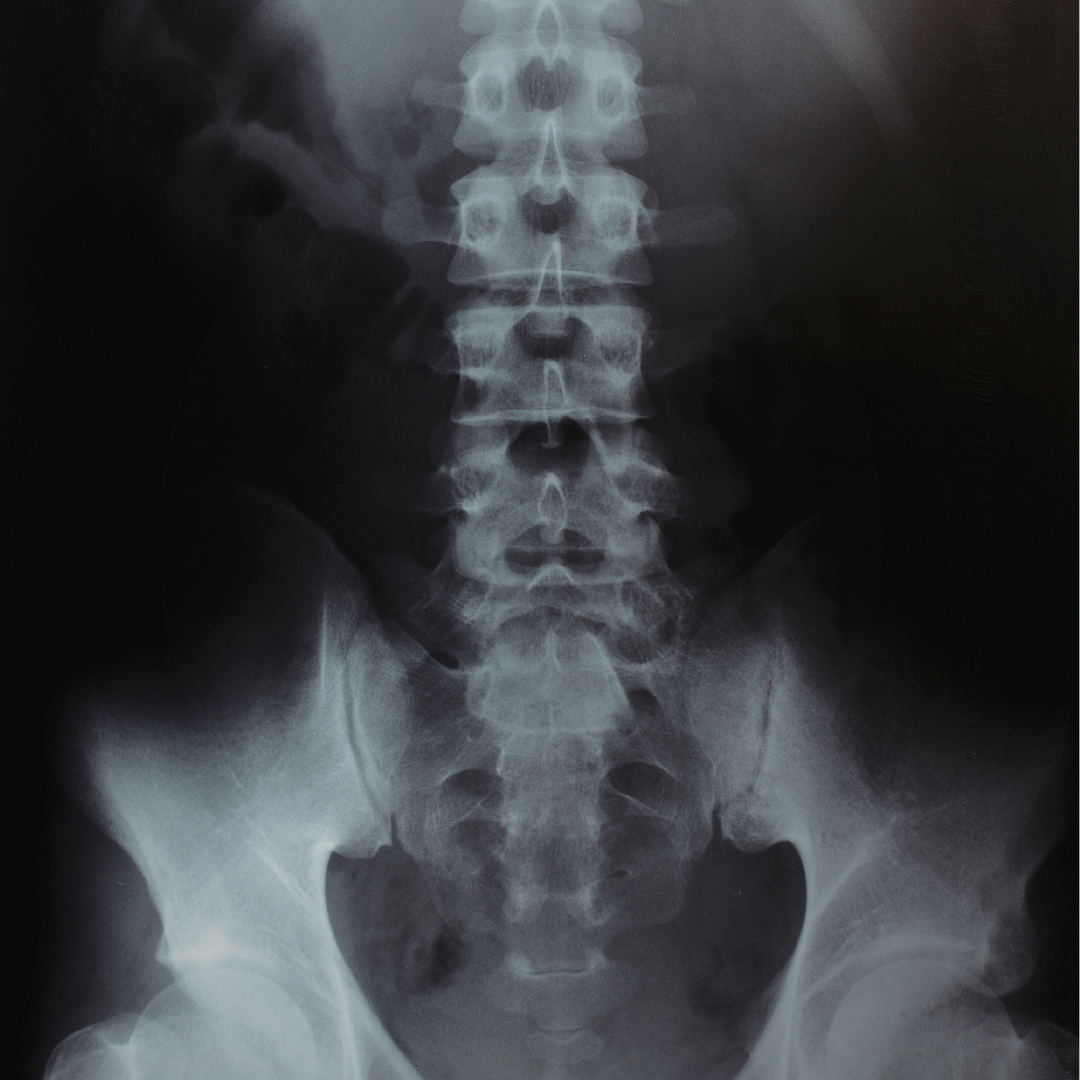
What a scan actually shows you
Research consistently shows that many people with no back pain at all have a disc bulge visible on MRI. Not people with back pain — people without it, walking around, feeling completely fine. The numbers increase with age, and by later life, disc changes are extremely common.
This doesn’t mean disc bulges are never relevant. Sometimes they genuinely are.
But finding one on a scan is not, by itself, an explanation for why you’re in pain.
A scan is a photograph. It shows one moment in time, and nothing more.
The disc that showed up on an MRI seven or ten years ago is not necessarily the disc you have today. Bulges can reduce. Symptoms can resolve completely while a structural finding remains.
The relationship between what a scan shows and what a person actually feels is much looser than most people are led to believe. I had a significant disc bulge myself when I was younger and at the time it was horrifically painful. Notice I say ‘had’. And ‘at the time’. Both of those words matter.
When an old explanation takes over
The problem isn’t the original diagnosis. The problem is what happens to it over time.
A label, once given with confidence, has a way of becoming the whole story. Every new episode of pain gets attributed to it. Every twinge seems to confirm it. And gradually, other possibilities — something more recent, more treatable, sometimes more straightforward — stop being considered at all.
I’m not saying the diagnosis was wrong. Often it was accurate at the time.
But bodies change. What was driving things years ago may not be what’s driving them now.
An explanation that never gets updated stops being useful and starts becoming limiting.
You might be solving the wrong problem
This is the part that often gets missed.
If your understanding of the problem is out of date, the things you’ve been doing to manage it may be out of date too. That can be why progress stalls — not because your body isn’t improving, but because the approach no longer matches what’s actually going on.


The most useful question isn’t whether the diagnosis was right. It’s whether it still fits.
What I actually do when someone comes in with a label
I don’t try to prove the old diagnosis wrong. I don’t dismiss it either.
I start by understanding it — when it was given, what was happening at the time, and how things have changed since. Then I look at how you’re moving now, what’s restricted, what’s sensitive, and what your body is actually doing today.
Sometimes the old finding is still relevant. Often, it’s only part of the picture. And sometimes, it turns out not to be the main issue at all.
Either way, the goal is the same: to make sense of what’s happening now, and give you a clearer, more up-to-date way of approaching it.
A fresh pair of eyes
If you’ve been carrying the same explanation for your back for years and things haven’t really shifted, it may be time to look at it differently.
Not to start from scratch — but to update the story so it reflects where you are now, not where you were then.
I’m currently seeing new patients at the clinic. If you’re unsure whether your diagnosis still fits, we can take a proper look at it together and work out what your body actually needs now.
For the month of May, you can enjoy 10% off your 1st appointment with Leon.
Leon Baugh - Osteopath & Sports Massage Practitioner at Shine
To book your treatment you can contact Leon directly or call our FOH team Tel: 0207 241 5033.

Related Treatments
-
 Osteopathy
Osteopathy Treatment at Shine North London Osteopa... -
 Sports Massage
If you think sports massage is only for sportspeop... -
 Myofascial Release
Myofascial Release at Shine in North London N16 Mu... -

 Acupuncture
Acupuncture Treatments at Shine Acupuncture is rec...